Why Evidence Matters After a Frisco Hit-and-Run
A hit-and-run can turn a bad day into a confusing and stressful one very quickly. The other driver hits you, then takes off, and you are left hurt, scared, and unsure what to do next. In Texas, a hit-and-run usually means a driver is involved in a crash and then leaves without stopping to share information or help anyone who is injured.
These cases are harder than normal wrecks because the at-fault driver is not standing there when police arrive. In the Frisco and Dallas areas, traffic is heavy, clean-up crews move fast, and roads are busy. Skid marks fade, debris is cleared, video gets recorded over, and people forget small details. That is why timing matters so much.
A hit-and-run accident victim lawyer can step in early to help preserve what is left. We work to track down the driver when possible, protect you from insurance tricks, and build a clear story of what happened. As summer brings more road trips, busy weekends, and teen drivers on break, the risk of hit-and-run crashes grows, so knowing these steps before you need them can make a big difference.
First Steps You Must Take After a Hit-and-Run
Your first job after any crash is safety. If you can, move your vehicle out of active lanes and turn on your hazard lights. Call 911 right away. Even if the other driver is gone, a police report creates a record that you were hit, where it happened, and what damage and injuries you had.
At the scene, try to write down what you remember while it is still fresh:
- Time and exact location of the crash
- Weather and road conditions
- Direction you were traveling and where the other vehicle came from
- Any part of the license plate you saw
- Vehicle color, type, and make or model
- Distinct features like bumper stickers, body damage, or roof racks
Use your phone camera if you are able. Take wide shots and close-ups of:
- All sides of your vehicle
- The road, skid marks, and broken glass
- Traffic lights, stop signs, and lane markings nearby
- Any visible injuries on you or your passengers
Look around and note nearby homes, offices, gas stations, or stores that might have cameras facing the road or parking lot. Those small details can lead to useful footage later.
Get medical care the same day, even if you think you are "not that hurt." In the Texas heat, shock and dehydration can make injuries feel strange. Seeing a doctor quickly helps show that your pain and problems came from the crash and not from something else, which is important when the insurance company reviews your claim.
Building Your Case with Photos, Video, and Physical Evidence
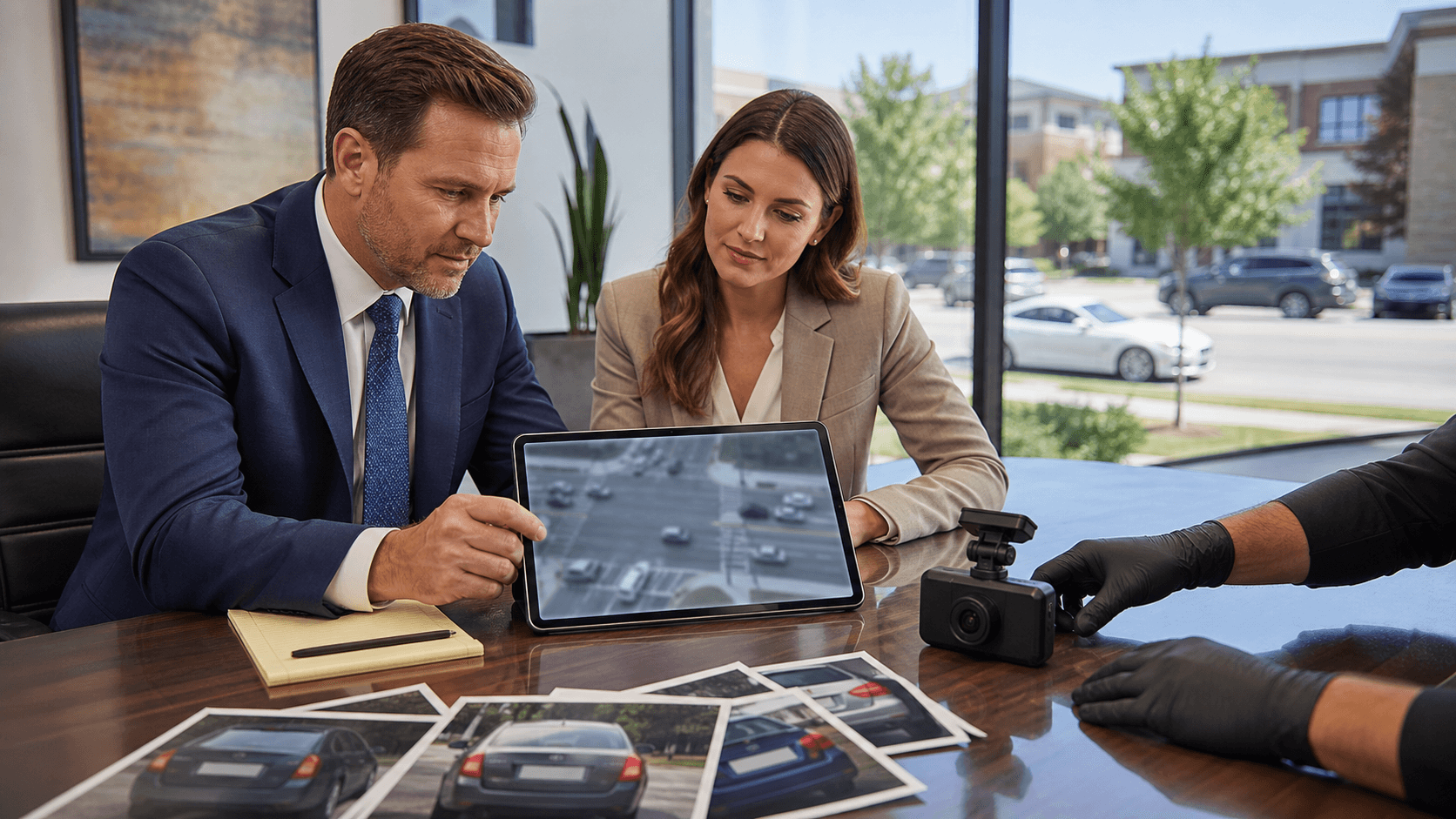
Physical evidence can tell a powerful story when the other driver is missing. The way your vehicle is damaged can show the angle and force of impact. Broken plastic, metal parts, and shattered glass left on the road might even match a certain type of car. Paint transfer can link one vehicle to another, and tire marks can show whether someone slammed the brakes or kept speeding.
Photos and videos are a big part of proving what happened. Try to capture:
- Close-up shots of damage to your car
- Wider shots that show your vehicle in relation to intersections or signs
- Lane markings, traffic signals, and crosswalks
- Lighting conditions, such as bright sun, rain, or nighttime visibility
Time-stamped images are especially helpful because they show when the crash scene looked that way. That can connect your injuries, the scene, and your story.
In Frisco, there are many sources of possible video:
- Store and restaurant cameras around shopping centers
- Residential doorbell cameras in neighborhoods
- Parking garage systems at offices or apartment complexes
- Businesses along major roads like the Dallas North Tollway and Preston Road
A hit-and-run accident victim lawyer can act quickly to send preservation letters to these businesses and property owners. Many systems record over themselves in a short time. Fast requests, followed by careful work with investigators or accident reconstruction experts, can save key footage before it disappears.
Using Witnesses and Police Work to Identify the Driver
People who saw the crash or the fleeing car can fill in missing pieces. If there are bystanders, politely ask them to stay until officers arrive. If they cannot stay, ask for their names and contact information. Some may have dashcam or cell phone video that caught the license plate or the exact moment of impact.
Witness statements can help by:
- Confirming that the other driver caused the crash
- Adding details about speeding, swerving, or running a light
- Describing the driver's behavior before leaving the scene
- Filling in gaps in your memory if you were in shock
Working well with police can also help your case. Give honest, detailed answers to Frisco officers or Texas DPS troopers. If you remember more later, ask how to give a supplemental statement so the report stays accurate and consistent.
A hit-and-run accident victim lawyer can follow up with law enforcement, request the crash report, and review any updates or supplemental findings. We then connect what officers learned with your injury claim, so the civil side and the criminal side line up as much as possible.
Insurance, Uninsured Motorist Coverage, and Proving Your Losses
Hit-and-run claims can involve more than one type of insurance. If the driver is found and has liability coverage, that policy may apply. When the driver is never identified, other coverages may help, including:
- Uninsured or underinsured motorist coverage (UM/UIM)
- Personal injury protection (PIP)
- Medical payments coverage, if included on your policy
Even if the driver is unknown, you still need to prove your damages. That usually means gathering:
- Medical records and doctor notes
- MRI, X-ray, or other imaging results
- Treatment plans, prescriptions, and therapy recommendations
- Pay stubs or employer letters showing lost wages
- Receipts for out-of-pocket costs like medications, travel to appointments, and medical equipment
Insurance companies often push back harder when there is no named at-fault driver. They might say your injuries are not serious, blame pre-existing conditions, or claim you are exaggerating because there is no one else to point to. A hit-and-run accident victim lawyer from Feizy Law Office can build a detailed file and present your damages in a clear way that adjusters understand. Preparing every case as though it might go to trial can also create stronger leverage during settlement talks.
Take Control of Your Hit-and-Run Claim in Frisco Today
Hit-and-run crashes are upsetting, but you are not powerless. In a busy North Texas area with heavy traffic and summer travel, waiting too long makes it harder to find the driver or prove what happened. Acting early helps preserve skid marks, debris, and camera footage, and it keeps witnesses easier to locate and contact.
The basic roadmap looks like this: stay safe and report the crash, gather details and photos at the scene, track possible cameras and witnesses, stay in touch with law enforcement, and work with a focused attorney to deal with the insurance side. At Feizy Law Office, we help hit-and-run victims in Frisco and the greater Dallas area with a client-centered approach, including free initial consultations, contingency-fee representation, and bilingual support where needed, so injured people can focus on healing while we handle the legal work.
Talk To A Lawyer Who Understands Hit-And-Run Cases
If you were injured by a driver who fled the scene, our team at Feizy Law Office is ready to listen, explain your options, and protect your rights. Speak with an experienced hit-and-run accident victim lawyer so you are not left dealing with insurers and medical bills on your own. We will evaluate your case, outline a practical strategy, and handle the legal details while you focus on your recovery. To schedule a consultation, simply contact us today.