Rear-end crashes in Frisco can get messy fast, especially when the rear driver and their insurer insist the front driver caused everything by stopping too quickly. Many people are shocked to find out that, even when they were the one hit from behind, they are suddenly the one being blamed. That blame can hurt your injury claim and leave you paying for medical bills, car repairs, and lost time from work.
In this article, we will talk about how these crashes really happen in Frisco traffic, how Texas negligence rules work when the front driver is accused, what kind of proof matters the most, and how a rear-end collision lawyer in Frisco, TX can help push back against unfair blame.
When You Get Blamed for a Rear-End Crash in Frisco
You are driving north on the Dallas North Tollway in stop-and-go traffic. Traffic slows, you brake, and a car slams into the back of you. Before the dust even settles, the other driver is saying you stopped for no reason, and their insurer tells you that you caused the crash.
Front drivers are getting blamed more often because of things like:
- Sudden stops near school zones and crosswalks
- Heavy traffic around shopping areas and events
- Drivers following too closely while distracted by phones
- Road rage and so-called brake checks
Texas law does not automatically make the rear driver 100 percent at fault. Fault depends on the facts, and insurers know that. They still often try to push as much blame as possible onto the front driver to reduce or deny payment.
So the real question is: how do you prove what really happened and protect your claim when the story is being twisted against you?
How Rear-End Collisions Really Happen in Frisco Traffic
If you drive in Frisco, you know how fast traffic patterns change. One minute cars are moving along Preston Road or the Sam Rayburn Tollway, and the next minute everyone is slamming on their brakes near a busy intersection, shopping center, or sports venue.
Common local patterns include:
- Single impact crashes where one car hits the back of another
- Chain-reaction "accordion" crashes where one impact pushes vehicles into each other
- Multi-vehicle pileups in heavy rain or low-visibility summer storms
Many "sudden stop" cases are not reckless at all. Drivers hit the brakes because of:
- A car turning or merging in front of them
- Pedestrians in crosswalks and kids near schools
- Construction or lane closures
- School buses picking up or dropping off students
- Debris or disabled vehicles in the lane
Then there is the debate about "brake checks" and road rage. Insurers are quick to say the front driver hit the brakes on purpose. But proving an intentional brake check is hard without clear evidence, like video or strong witness statements. Each type of crash calls for a different approach and different proof, and that is how a good attorney will shape your case.
Texas Negligence Rules When the Front Driver Is Accused
Texas follows comparative negligence rules. That means you can still recover money even if you are partly at fault, as long as you are not more than 50 percent responsible. Your compensation may be reduced by your share of fault, but it does not vanish unless the other side can push you over that line.
Insurers often argue that the front driver:
- Stopped too fast for no reason
- Failed to use a signal before slowing or turning
- Cut off the other driver and then braked
- Intentionally brake checked
But drivers in the back also have clear legal duties. They must keep a safe following distance, pay attention to traffic ahead, and control their speed based on conditions. If traffic is heavy, stop-and-go, or slowed for school zones and construction, a driver who is tailgating or looking at a phone may carry most of the blame.
In chain-reaction crashes, fault can be split among several drivers. A middle driver who gets shoved forward may be unfairly blamed, even though they had no chance to avoid the impact. Passengers, pedestrians, and rideshare users can have claims against one or more drivers, depending on who was careless.
Proving What Really Happened After a Rear-End Crash
When stories clash, physical proof can tell the truth. Helpful evidence includes:
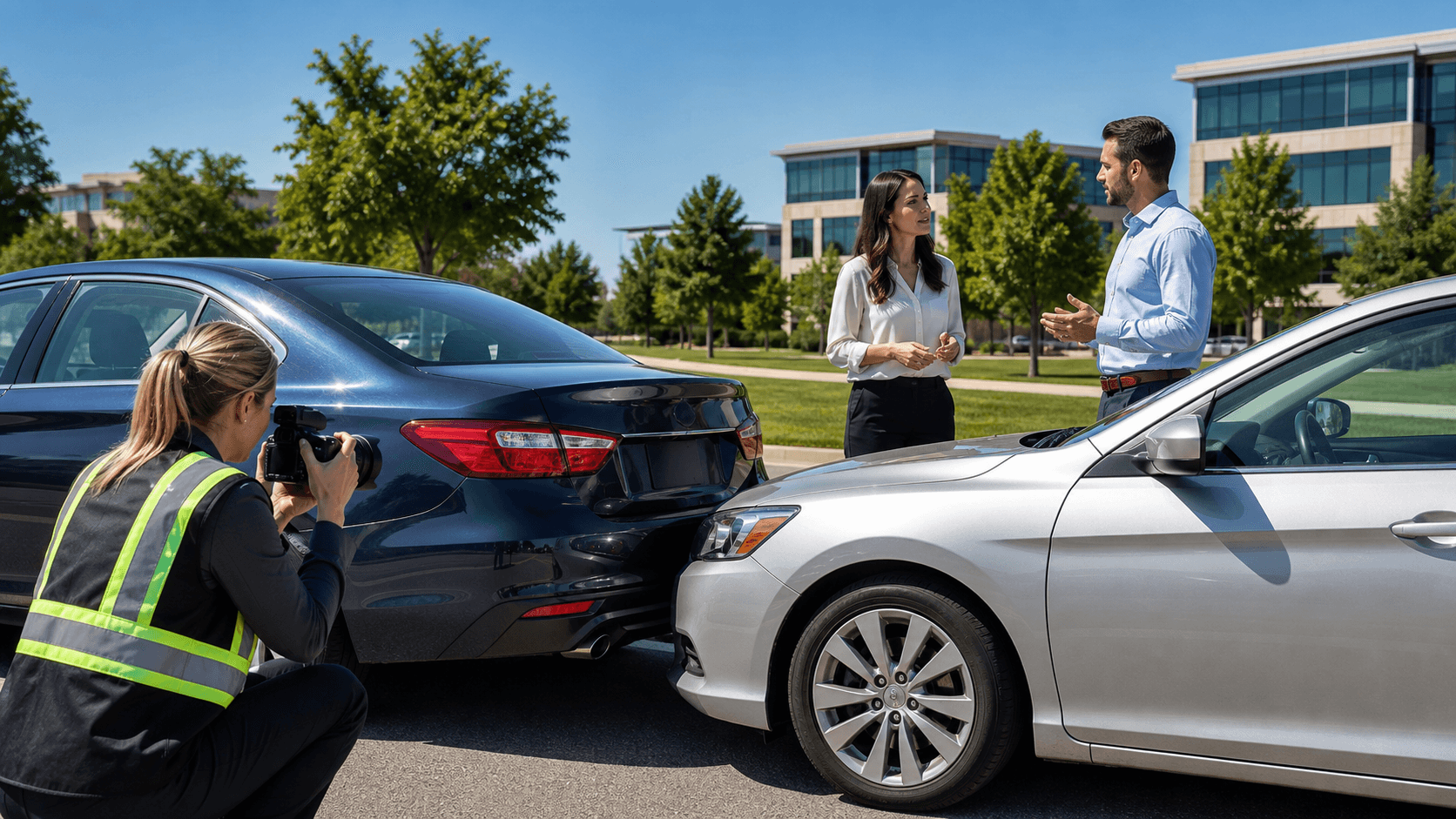
- Damage patterns on each vehicle
- Skid marks or the lack of them, showing whether the rear driver tried to stop
- Where debris landed in the road
- Airbag deployment and seat positions
Nearby cameras can be a game changer. Useful footage may come from:
- Business security cameras near intersections
- Dashcams from any vehicle involved
- Traffic or neighborhood cameras
- Cameras at apartments, gated communities, or HOAs
Witness and tech evidence also matter, such as:
- Neutral bystander statements
- Passenger accounts
- 911 recordings
- Vehicle "black box" data on speed and braking
- Phone records that suggest the rear driver was distracted
In more serious or disputed crashes, accident reconstruction experts can analyze all this data to explain the sequence of impacts, speeds, and driver behavior.
Right after a crash, it helps if you:
- Call police so there is an official report
- Take photos and video of the scene, vehicles, and road
- Get medical care the same day, even if pain seems mild
- Avoid apologizing or saying it was your fault
Tactics Insurers Use to Blame the Front Driver
Insurance adjusters are trained to save money for their company. One way they do that is by shifting blame. You may hear things like:
- "You stopped too fast for traffic conditions."
- "You admitted you hit your brakes hard."
- "You could have moved to the shoulder instead of stopping."
- "Everyone else was moving, you caused the slowdown."
Early recorded statements can be risky. People are often in pain, on medication, or just plain shaken up. A simple phrase like "I stopped suddenly" can be twisted into "you caused the crash."
Social media and texts can also backfire. Casual posts or jokes about being "distracted," "in a hurry," or "slamming the brakes" can be taken out of context and used against you.
Another common tactic is downplaying injuries like whiplash, neck and back pain, or concussions, especially when symptoms grow worse over the next few days. Detailed, consistent medical records are very important for these kinds of injuries.
Protecting Your Rights After a Rear-End Crash in Frisco
After a rear-end crash, especially during busy summer and back-to-school season when roads are packed with families, teen drivers, and construction zones, a simple plan can help protect your rights:
- Report the crash to law enforcement
- Gather photos, video, and contact details for witnesses
- Get checked by a doctor as soon as you can
- Follow the treatment plan and keep all follow-up visits
- Keep damaged property, such as your vehicle and car seats
- Avoid long talks with the other driver's insurer by yourself
An attorney can look at the big picture of your losses, including:
- Medical bills and future care
- Time missed from work
- Reduced ability to earn money
- Pain, emotional stress, and loss of enjoyment of life
- Wrongful death damages for families in the most serious cases
Texas has strict time limits for injury and wrongful death cases. Waiting too long can hurt your claim and make it harder to collect the proof you need. Even if you think you might share some blame, you should not assume you have no case until a knowledgeable rear-end collision lawyer in Frisco, TX reviews the facts with you.
At Feizy Law Office, we focus on helping injured people tell their story clearly, gather the right evidence, and challenge unfair attempts to shift fault onto the front driver.
Protect Your Rights After a Rear-End Crash Today
If you were hurt in a rear-end collision, you do not have to handle the insurance company on your own. At Feizy Law Office, we can investigate what happened, explain your options, and pursue the compensation you deserve. Talk with an experienced rear-end collision lawyer in Frisco, TX about your case so you can focus on healing. To get started, simply contact us for a free, no-obligation consultation.