
Protect Your Claim by Giving Timely Notice
A serious injury does not automatically mean a property owner is legally responsible for a slip and fall. In many Frisco cases, the question comes down to notice: Did the owner or manager know about the unsafe condition, or should they reasonably have known about it before the fall?
Spills, uneven floors, poor lighting, loose mats, wet entryways, and damaged walkways can all create risks. During autumn, rain, wet leaves, heavier retail traffic, seasonal displays, and crowded parking areas may add to those risks. We want you to understand how actual and constructive notice work, what evidence may show notice, and why acting quickly after a fall can matter.
Why Notice Can Make or Break a Slip-and-Fall Claim
Actual notice means someone connected to the property knew about the hazard before the incident. That knowledge may come from an employee seeing a spill, a worker creating the unsafe condition, a customer making a complaint, or a manager receiving a maintenance report.
For example, a store may have actual notice if an employee was told that water had collected near an entrance but did not place a warning sign or clean it up. Actual notice can also exist when a business knows that a handrail is loose, a floor tile is broken, or a parking lot light has stopped working.
Constructive notice is different. It applies when the owner may not admit knowing about the condition, but the hazard existed long enough that reasonable inspection and maintenance practices should have found it. A property owner is not necessarily responsible for every sudden spill or unexpected problem. Still, a condition that remains unattended for an extended time may raise questions about whether the property was being monitored properly.
Insurers and property owners may also look closely at your actions. They may argue that:
- The hazard was open and obvious
- Warning cones or signs were present
- You were distracted or not watching where you were walking
- Your shoes contributed to the fall
Those arguments do not end every claim, but they can affect how the facts are evaluated. A slip and fall attorney in Frisco can review the condition, the available evidence, and the defenses a property owner may raise.
When a Frisco Property Owner May Be on Notice
How long the hazardous condition existed often matters. A drink spilled seconds before a fall may be treated differently from a puddle that has become dirty, has footprints through it, or appears on security footage well before the incident. Details like these can help show whether employees had a reasonable opportunity to discover and address the problem.
Recurring hazards can matter, too. If rainwater regularly collects by an entrance, a business may need reasonable steps to monitor that area. The same may be true when merchandise often blocks aisles, pavement repeatedly breaks apart in a parking lot, or a stairwell is consistently poorly lit.
In our review of slip-and-fall matters, we often look for records that may show how a property was inspected and maintained. Depending on the location, helpful information may include:
- Cleaning and inspection logs
- Employee statements and manager reports
- Maintenance requests or repair records
- Security camera footage
- Prior reports of similar hazards
Stores, restaurants, apartment complexes, and other property owners may have their own inspection procedures. When those procedures are not followed, the missing or incomplete records can become important. On the other hand, a well-documented inspection shortly before a fall may also be part of the property owner's defense. The details surrounding the condition, timing, and response all deserve careful review.
Preserve Evidence That Can Show Notice
After a fall, reporting the incident promptly can help create a record of what happened. If you are able, tell a manager, employee, landlord, or other property representative about the fall and ask whether an incident report is being prepared. The report may identify the time, location, witnesses, and the condition that caused the incident.
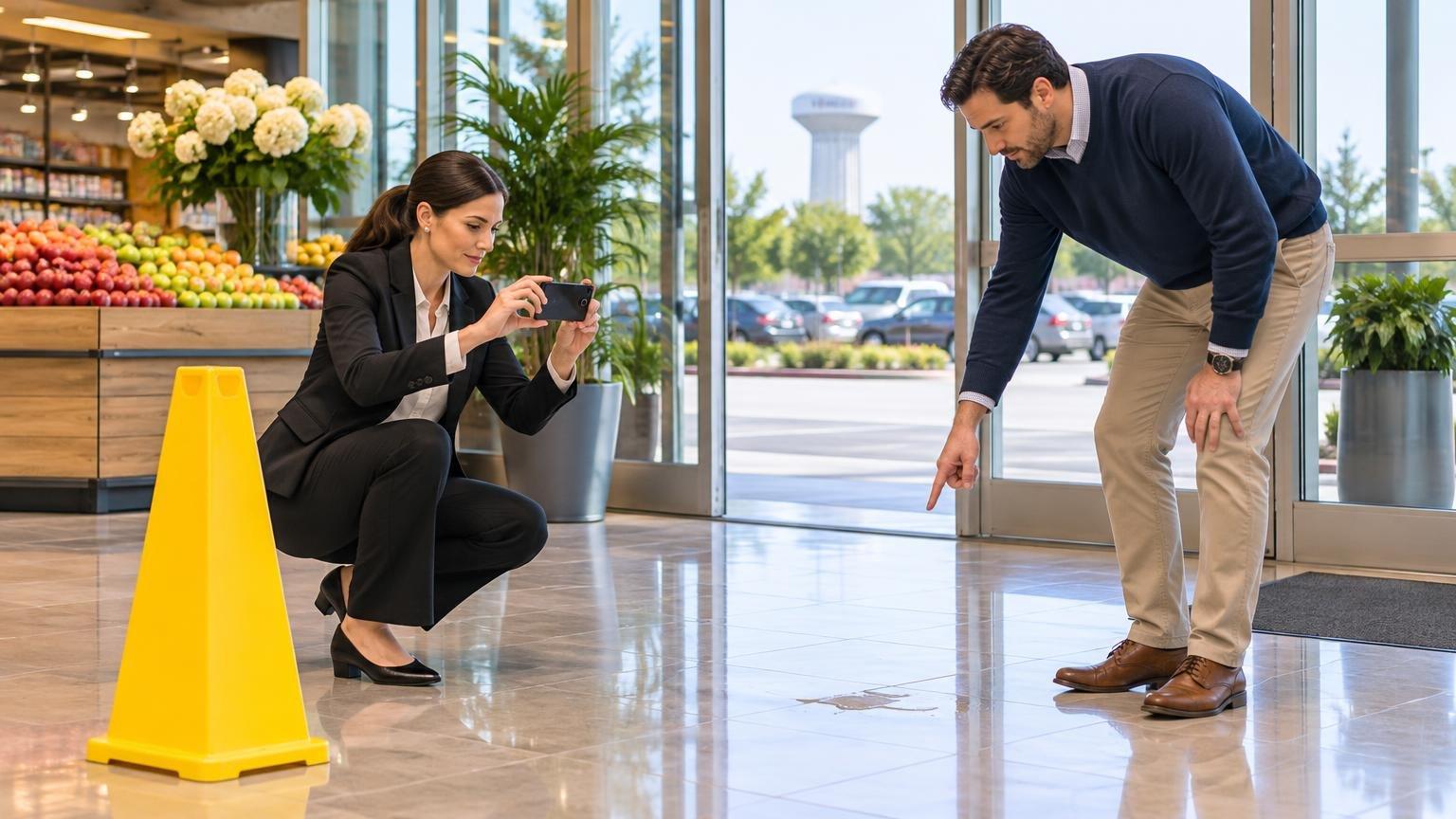
Photos and videos can also be helpful because conditions often change quickly. A spill may be cleaned, a broken tile may be repaired, or a warning sign may appear after the fact. If possible, document the area without putting yourself at further risk.
Useful information may include:
- The hazard and surrounding area
- Any warning signs, cones, or lack of warnings
- Your footwear and visible injuries
- Weather conditions near the property
- Names and contact information for witnesses
Surveillance footage can be especially important. Many businesses record video over older footage after a short period. That video may show when the condition appeared, whether employees walked past it, whether customers reported it, and how the fall occurred. We may seek preservation of footage, incident reports, inspection records, and other materials before they are lost or destroyed.
Government Property Claims May Have Shorter Deadlines
A fall on public property may involve different notice rules. This can include sidewalks, parks, public buildings, government-operated facilities, school property, or areas maintained by a city, county, transit agency, or another governmental body.
Under the Texas Tort Claims Act, notice requirements may apply to certain injury claims involving government entities. Local entities may also have their own procedures and deadlines. These deadlines can be much shorter than the general deadline that may apply to a personal injury lawsuit, so waiting to learn who owns or maintains the property can create problems.
A routine incident report may not be enough. Written notice may need to identify the incident, the location, the injuries, and the circumstances involved. Property ownership can also be less obvious than it seems. A walkway near a shopping center, school, or public building may be maintained by a different entity than you expect. Prompt legal guidance can help identify the responsible party and the notice requirement that may apply.
Take Prompt Steps to Protect Your Frisco Claim
Notice often depends on evidence that can disappear quickly. Security video may be overwritten, a spill may be cleaned, logs may be updated, and witnesses may forget important details. Seeking medical care, saving bills and records, keeping notes about symptoms, and preserving communications related to the incident can help protect the information connected to your fall.
Before giving a recorded statement to an insurer, it is wise to understand your rights and the facts that may affect your claim. A clear timeline, preserved photographs, witness information, and prompt requests to retain video or records can help document whether a property owner had actual or constructive notice before key evidence disappears.
Get Clear Guidance for Your Next Steps
At Feizy Law Office, we assess the details of your accident and help you understand the options available for pursuing compensation. Speak with a slip and fall attorney in Frisco who can review the circumstances surrounding your injury. Contact us to discuss your case with our team.