
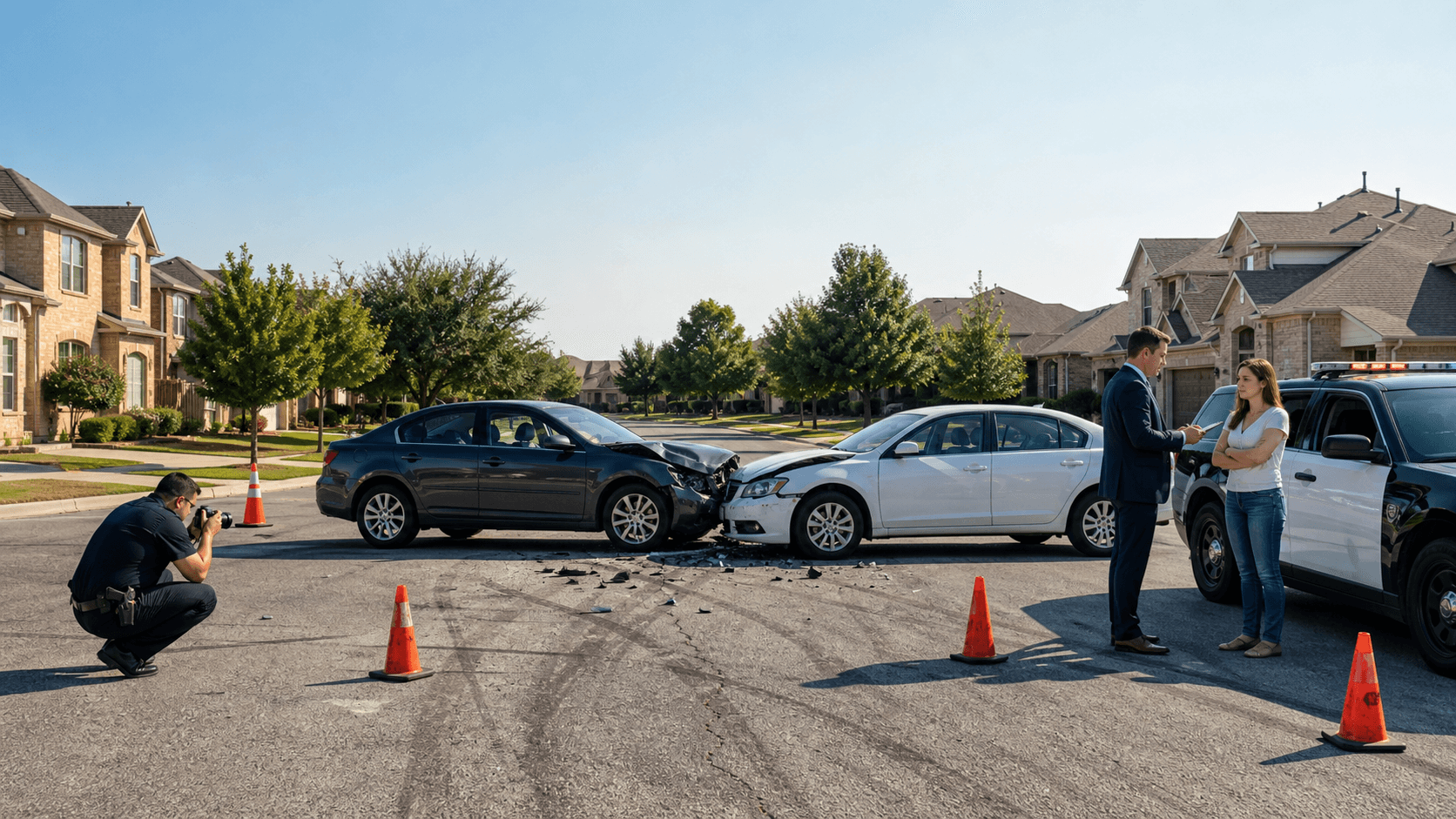
When a Head-On Crash Turns Your Life Upside Down
A head-on crash on a Frisco road can change everything in a single second. One moment you are driving on the Dallas North Tollway, Preston Road, or Highway 121, and the next there are headlights coming straight at you with nowhere to go. The force of two moving vehicles hitting nose to nose is one of the most violent impacts that can happen on the road. It often leads to broken bones, head and spine injuries, and in the worst cases, wrongful death.
Head-on collisions are so serious because both vehicles are moving toward each other. Speeds add up fast, and the human body is not built to handle that kind of impact. People can face surgeries, long recovery, or permanent limits on work and daily life. Families are often left wondering what exactly happened and how they will cope.
The big challenge is proving the truth. Was the other driver going the wrong way? Were they on the phone, speeding, or under the influence? Answers to these questions decide who is held responsible. Acting quickly to protect black-box data from the vehicles and phone records can make a huge difference in how a case turns out. As fall brings back-to-school routines, football games, weekend trips, and more late-night driving around Frisco and North Dallas, roads stay busy. That also means more chances for distracted or impaired drivers to cause harm.
How Head-On Crashes Happen on Frisco Roads
Head-on wrecks do not come out of nowhere. There are patterns we see again and again on local roads.
On bigger highways and tollways, wrong-way driving is a serious danger. A driver might:
- Enter from the wrong ramp
- Miss or ignore signs
- Cross the median or barrier into oncoming lanes
On two-lane roads in Collin and Denton Counties, a driver can:
- Drift across the center line
- Try unsafe passing without enough room
- Speed into a curve and lose control
Inside busy Frisco neighborhoods, a car can veer into oncoming traffic because the driver is looking down at a phone or turning without checking the road ahead. Even at lower speeds, a direct front-to-front hit can cause heavy damage.
Common causes include:
- Drunk or drug-impaired driving
- Texting, scrolling apps, or fiddling with GPS
- Fatigue and drowsy driving
- Speeding or aggressive driving
- Running red lights or stop signs
Under Texas law, every driver has a duty to act with reasonable care. That means paying attention, following traffic laws, and keeping control of the vehicle. When a driver breaks that duty by doing things like driving drunk or looking at a phone instead of the road, and that behavior causes a head-on crash, they can be found negligent. Often, more than one bad choice is involved, like speeding and texting at the same time. Those combined factors can increase their responsibility for the harm they cause.
Proving Wrong-Way, Distracted, or Impaired Driving
After a serious head-on collision, the other driver may deny what happened or claim you drifted into their lane. That is where careful evidence gathering comes in.
To prove wrong-way driving, we look at:
- Crash scene layout and lane markings
- Skid marks and gouge marks in the pavement
- Where the vehicles ended up after impact
- Police diagrams and officer notes
- Nearby traffic cameras or business security video
This kind of proof helps show which lane each vehicle was in and how the impact occurred.
To uncover distraction, we may need:
- Cell phone records showing calls, texts, or data use
- Social media or messaging timestamps close to the time of the crash
- Vehicle infotainment system logs
- Witness statements about swerving, drifting, or delayed braking
When someone is glancing down at a phone, their vehicle often weaves or reacts late to hazards. Those observations, tied to phone records, can show that attention was not on the road.
Impairment claims are built with several pieces:
- Officer observations like slurred speech, odor of alcohol, or unsteady walking
- Field sobriety test results
- Breath or blood test results, when taken
- Bar or restaurant receipts and timelines
- Witness reports about erratic driving before the crash
A head-on collision injury lawyer connects all of this to your injuries and losses. The focus is on proving how the other driver's choices directly led to the crash and to the damage done to your body, your work, and your family life.
Why Black-Box and Phone Evidence Cannot Wait
Modern vehicles usually have an event data recorder, often called a black box. It does not record video, but it captures important technical data from just before and during a crash. In a head-on collision, black-box data can show:
- Vehicle speed
- Braking and accelerator position
- Sudden steering inputs
- Seat belt use
- Airbag deployment timing
This information can help answer questions like whether the other driver tried to brake or was speeding up at impact.
The problem is that this data does not always stick around. If the vehicle is repaired, resold, or scrapped, the recorder can be lost. In some cases, new events can overwrite older data. Phone records and app data are also time-sensitive. Carriers and app companies only keep certain details for limited periods, and businesses may erase camera footage on a regular schedule.
Acting early matters. An experienced head-on collision injury lawyer can:
- Send preservation or spoliation letters to keep vehicles and data from being destroyed
- Request black-box downloads before the car disappears
- Subpoena cell phone and app records when appropriate
- Work with crash reconstruction experts who know how to read and explain the data
Without fast legal steps, key proof of speeding, distraction, or impairment can simply vanish.
Building Your Compensation Claim After a Head-On Crash
Once the cause of the crash is investigated, the next step is building your claim for compensation. Texas law allows injured people to seek money for different types of losses, such as:
- Emergency care, hospital stays, and surgeries
- Future medical treatment, physical therapy, and rehab
- Lost wages and reduced ability to earn a living
- Pain and suffering and mental anguish
- In fatal crashes, wrongful death damages for certain family members
Good documentation is the backbone of these claims. That can include:
- Medical records, diagnostic imaging, and doctor notes
- Physical therapy and counseling records
- Photos of injuries and damage to your vehicle
- Employer letters about missed work and schedule changes
- Tax returns and pay stubs to show income before the crash
- Expert opinions from medical and vocational professionals
Insurance companies often try to limit what they pay after a serious head-on crash. They may say your injuries are not as bad as you report, claim that you shared most of the blame, or push quick low offers before you know the full impact on your health. A focused head-on collision injury lawyer works to push back against these tactics and present a clear, detailed picture of your losses.
Take Swift Legal Action to Protect Your Future
Right after a Frisco head-on collision, everything can feel confusing. A few simple steps can help protect both your health and your legal rights.
If you are able:
- Get medical care right away, even if you feel "okay" at first
- Call law enforcement and make sure a report is made
- Take photos or videos of the vehicles, the road, and visible injuries
- Collect names and contact details of witnesses
- Keep any receipts or paperwork tied to the crash
Be very careful about giving long or recorded statements to any insurance company before speaking with a lawyer. Things said in the shock of the moment can be twisted or used against you later.
When a head-on collision turns your life upside down, quick legal action helps preserve black-box data, secure vehicles, obtain phone records, and bring in investigators while memories are still fresh. Feizy Law Office, based in the Dallas and Frisco area, focuses on personal injury cases like these and understands how local roads and traffic patterns play into head-on crashes. Working with a head-on collision injury lawyer who knows how to build these cases is one way to protect your future and pursue full accountability from the driver who caused your harm.
Protect Your Rights After a Head-On Collision
If you were injured in a head-on crash, you do not have to navigate the aftermath alone. At Feizy Law Office, we can evaluate your case, explain your options, and fight for the compensation you deserve. Speak with an experienced Head-on collision injury lawyer who understands how to build a strong claim. To get started, reach out and contact us for a free, no-obligation consultation.