What Happens When A Truck Driver Uses A Personal Phone?
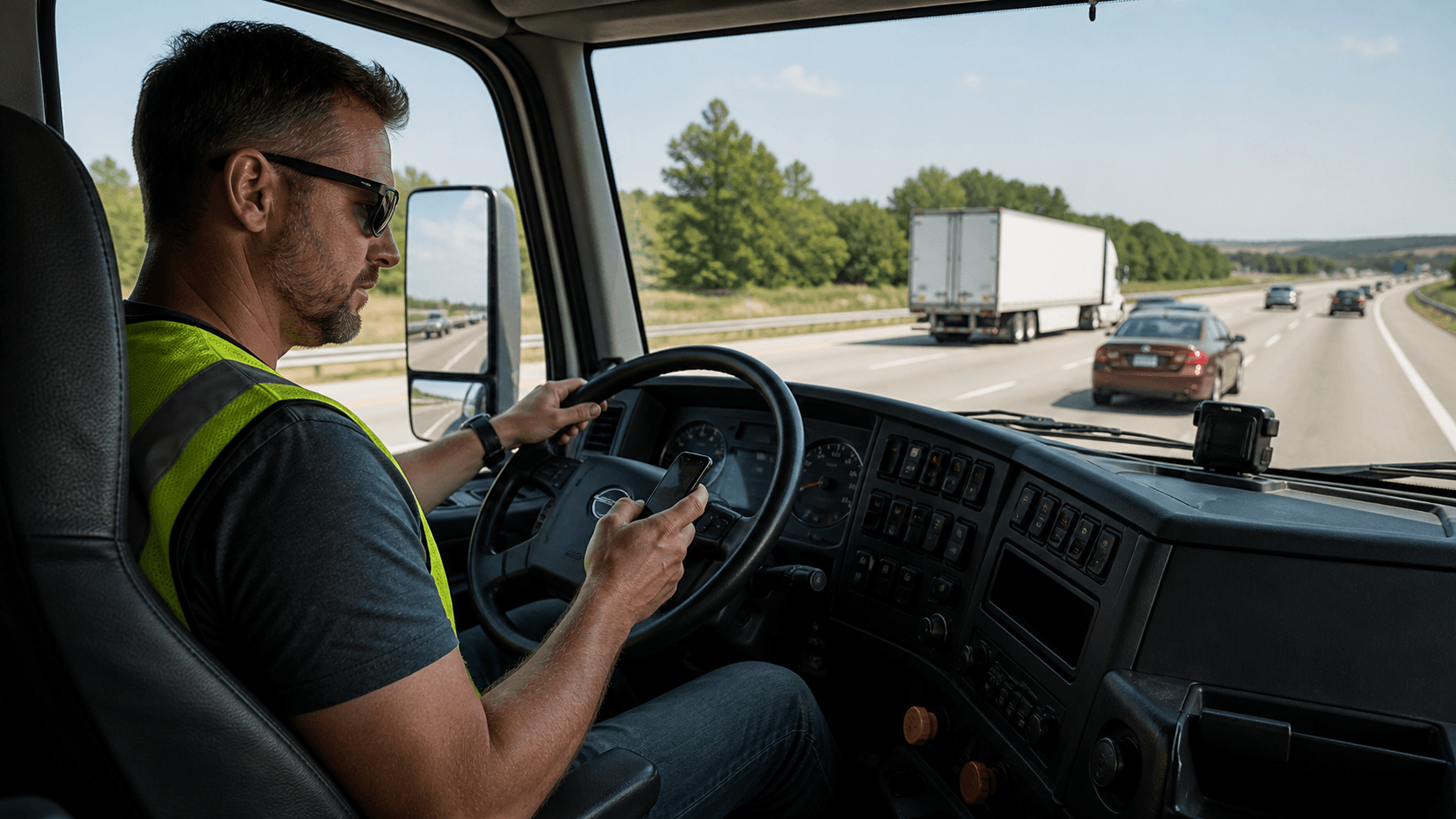
A truck driver's personal phone can become important evidence after a serious crash. A quick text, social media check, personal call, or change to a navigation app can pull a driver's eyes, hands, or focus away from traffic when seconds matter.
Because commercial trucks are large and take longer to stop, even a brief distraction can cause major harm. At Feizy Law Office, we often help injured people look beyond the first explanation for a wreck and ask whether phone use, company pressure, or another safety failure played a part.
Phone Use Can Turn Routine Driving Into a Crisis
A personal phone is not harmless just because a trucking company did not issue it. When a driver uses a private device while operating a commercial truck, that behavior may still break safety rules and may point to distracted driving.
Large trucks need more room to brake, turn, merge, and respond to sudden changes in traffic. A few moments spent looking down at a screen can lead to a rear-end collision, an unsafe lane change, an underride crash, or a wreck involving several vehicles.
After a truck crash, we encourage you to avoid assuming that the police report tells the full story. Important questions may include:
- Was the driver making or receiving a call before impact?
- Were text messages, apps, or social media active around the time of the crash?
- Did the truck's movement show delayed braking or drifting between lanes?
- Did the driver give an account that conflicts with electronic records or witness statements?
The answer may not be obvious at the crash scene. That is why a careful review of the available evidence matters.
Federal Rules Limit Phone Use Behind the Wheel
Federal Motor Carrier Safety Administration rules generally prohibit commercial drivers from using hand-held mobile phones while operating commercial motor vehicles. Holding a phone, manually dialing, reading or sending messages, or reaching for a device in a way that takes the driver out of a normal seated driving position can create serious safety concerns.
A driver may say a call was brief or that a phone was being used for work-related navigation. Still, the larger question is whether the device distracted the driver or violated an applicable safety rule. Even hands-free use can raise concerns when a conversation, alert, app, or route change takes attention away from traffic.
Safety-rule violations can lead to consequences for both the driver and the motor carrier. In an injury claim, proof that a driver ignored a rule meant to protect the public may support the argument that reasonable care was not used.
As a commercial truck accident lawyer in Frisco, we focus on evidence rather than guesses. Phone use is only one possibility, and the records must be reviewed alongside the crash timeline and other facts.
Phone Evidence Can Help Explain a Truck Crash
Cell phone evidence may help reconstruct what happened in the minutes before a collision. Call logs, message timestamps, data activity, app use, GPS history, photos, and social media activity can sometimes show whether a driver was actively using a phone near the time of impact.
That information must be viewed with care. A phone record alone may not prove that a driver caused a crash. It can become much more meaningful, however, when it matches other signs of distracted driving, such as delayed braking, a missed traffic signal, a sudden lane movement, or a statement that does not match the physical evidence.
A complete truck crash investigation may also involve:
- Electronic logging device information
- Engine-control-module data
- Dash camera or nearby surveillance footage
- Dispatch messages and company communications
- Inspection, maintenance, and driver qualification records
Time matters because some electronic records can be overwritten, deleted, or become harder to obtain. We may seek preservation of relevant materials, including phone records, onboard data, video, maintenance documents, and post-crash testing information. A commercial truck accident lawyer in Frisco can help identify what evidence may matter and pursue it through the proper legal process.
Responsibility May Extend Beyond the Truck Driver
The truck driver may be responsible for unsafe phone use, but the driver may not be the only party connected to the crash. A trucking company's hiring, training, supervision, dispatch practices, or safety policies may also deserve close review.
For example, company records may show whether a carrier ignored prior phone-related violations, failed to enforce distraction policies, or expected drivers to answer work messages while driving. Unrealistic delivery schedules can also create pressure that encourages poor decisions behind the wheel.
Other parties may share responsibility depending on the facts. The truck owner, cargo company, maintenance provider, broker, vehicle manufacturer, or another motorist may be involved. Texas proportionate-responsibility rules make it important to examine every possible source of fault before an injured person accepts a settlement.
The source of the phone does not decide the issue. Whether it was a personal device, a company-issued phone, or a third-party app, the question is how it was used and whether that conduct caused or contributed to the wreck.
Holiday Freight Brings Added Risks
Early November often brings heavier freight traffic as stores prepare for Thanksgiving, Black Friday, and year-end deliveries. More commercial trucks may be on roads in and around Frisco, along with heavier traffic, earlier sunsets, rain, construction zones, and stop-and-go congestion.
Those conditions leave less room for error. A driver distracted by a phone may miss slowing traffic, fail to see a merging vehicle, or react too late to a changing signal. Delivery demands do not excuse unsafe driving. Trucking companies should set reasonable schedules, train drivers, monitor compliance, and enforce rules against hand-held phone use.
When sharing the road with large trucks, we recommend leaving extra following distance, avoiding blind spots, watching for wide turns, and using added care near merge areas. If a collision occurs, seek medical attention, save photos and videos, keep witness information, and avoid giving a recorded statement before you understand your options.
Protecting Important Evidence After a Truck Crash
Medical care should come first after a serious crash. Following recommended treatment and keeping records can help show the physical, emotional, and financial impact of your injuries. Save medical bills, insurance letters, missed-work records, photographs, and notes about pain or daily limits.
Phone use may be a major clue, but proving its role usually takes fast action and a thorough review of the facts. Preserve what you can, keep your own records organized, and remember that evidence held by a trucking company may not remain available forever.
Protect Your Rights After A Truck Crash
At Feizy Law Office, we can assess the circumstances of your collision and explain the options available to you. Speak with a commercial truck accident lawyer in Frisco about building a strong claim for the compensation you may deserve. Contact us to discuss your case with our team.